
Introduction
In today’s competitive digital landscape, simply driving traffic to your website isn’t enough. The real challenge is converting those visitors into paying customers. This is where Landing Page Optimization (LPO) plays a crucial role. To achieve better results, businesses should combine landing page optimization with effective strategies offered by a professional digital marketing agency.
A well-optimized landing page can significantly increase your conversion rates, reduce bounce rates, and maximize your return on investment (ROI). Whether you’re running paid ads, email campaigns, or organic traffic strategies, your landing page is the final step that determines success.
What is Landing Page Optimization?
Landing Page Optimization (LPO) is the process of improving elements on your landing page to increase conversions. These conversions could be:
- Form submissions
- Product purchases
- Newsletter signups
- Download requests
The goal is simple: turn more visitors into customers without increasing traffic.
Why Landing Page Optimization Matters
Here’s why LPO is essential for your business:
1. Increases Conversion Rates
A small tweak in design or copy can lead to significant improvements in conversions.
2. Reduces Cost Per Acquisition (CPA)
Better conversions mean you spend less money acquiring each customer.
3. Improves User Experience
An optimized page makes it easier for users to take action.
4. Maximizes Marketing ROI
You get more value from your existing traffic sources. Optimizing your landing pages alongside expert digital marketing services can significantly improve your return on investment.
Key Elements of a High-Converting Landing Page
1. Compelling Headline
Your headline is the first thing visitors see. It should:
- Grab attention immediately
- Clearly communicate value
- Be relevant to your ad or traffic source
Example:
“Boost Your Website Conversions by 200% with Proven Strategies”
2. Clear and Engaging Subheadline
The subheadline should support your headline and provide more context.
3. Strong Call-to-Action (CTA)
Your CTA is the most important element on the page.
Best practices:
- Use action-oriented words (Get, Start, Download)
- Make it visually prominent
- Use contrasting colors
Examples:
- “Get Started Now”
- “Claim Your Free Audit”
4. Persuasive Copy
Your content should focus on benefits, not just features.
Instead of:
“We offer SEO services”
Say:
“Get higher rankings, more traffic, and increased sales with our SEO expertise”
5. High-Quality Visuals
Use:
- Relevant images
- Product screenshots
- Explainer graphics
Visuals help users understand your offer quickly.
6. Social Proof
Build trust using:
- Customer testimonials
- Reviews
- Case studies
- Client logos
7. Mobile Optimization
Most users browse on mobile devices, so ensure your landing page:
- Loads quickly
- Is responsive
- Has easy-to-click buttons
8. Fast Loading Speed
A delay of even 1 second can reduce conversions.
Tips:
- Optimize images
- Use caching
- Minimize scripts
9. Simple and Clean Design
Avoid clutter. Keep your layout:
- Focused
- Easy to scan
- Distraction-free
10. Trust Signals
Add credibility with:
- SSL certificates
- Guarantees
- Privacy assurances
Proven Landing Page Optimization Strategies
1. A/B Testing
Test different versions of your page to see what works best.
Test elements like:
- Headlines
- CTA buttons
- Images
- Layout
2. Use Heatmaps and Analytics
Tools like heatmaps help you understand:
- Where users click
- How far they scroll
- Where they drop off
3. Match User Intent
Ensure your landing page matches:
- Ad copy
- Keywords
- Audience expectations
4. Reduce Form Fields
Shorter forms lead to higher conversions.
Ask only for essential information.
5. Use Urgency and Scarcity
Encourage action with:
- Limited-time offers
- Countdown timers
- “Only 5 spots left”
6. Personalization
Tailor content based on:
- Location
- Behavior
- Traffic source
Common Landing Page Mistakes to Avoid
- Weak or unclear CTA
- Slow loading speed
- Too much text
- Lack of trust signals
- Not mobile-friendly
- Ignoring data and analytics
Tools for Landing Page Optimization
Here are some popular tools:
- Google Optimize (A/B testing)
- Hotjar (heatmaps & behavior tracking)
- Unbounce (landing page builder)
- Google Analytics (performance tracking)
Landing Page Optimization Checklist
Before publishing your page, ensure:
✔ Clear headline and value proposition
✔ Strong CTA above the fold
✔ Mobile-friendly design
✔ Fast loading speed
✔ Social proof included
✔ Minimal distractions
✔ Proper tracking setup
Conclusion
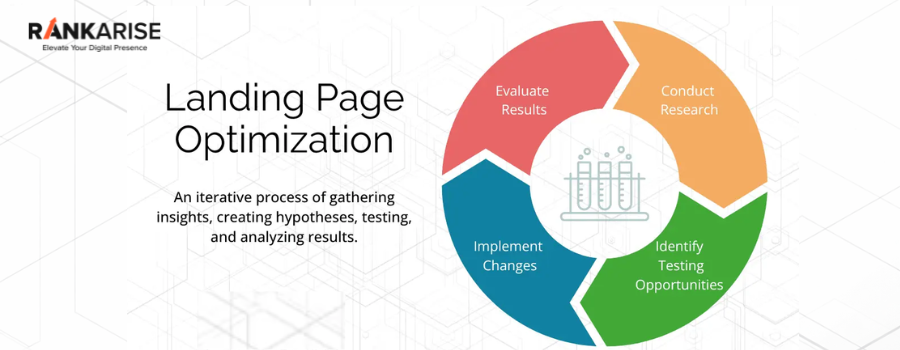
Landing Page Optimization is not a one-time task—it’s an ongoing process of testing, analyzing, and improving. By focusing on user experience, clear messaging, and data-driven decisions, you can turn more visitors into loyal customers.
If you want to maximize your conversions and grow your business, investing in LPO is one of the smartest moves you can make.
FAQs
1. What is a good landing page conversion rate?
A good conversion rate typically ranges between 2% to 10%, depending on your industry.
2. How often should I optimize my landing page?
You should continuously test and optimize based on performance data.
3. What is the most important element of a landing page?
The Call-to-Action (CTA) is the most critical element.
4. Can landing page optimization improve SEO?
Yes, better user experience and engagement can positively impact SEO rankings.