
Introduction
Running paid ads without a solid SEO foundation is like pouring water into a leaky bucket—you spend money, but results don’t last. Many businesses rush into Google Ads or social media campaigns expecting quick conversions, but without proper on-page and technical SEO, those efforts often fail to deliver maximum ROI.Before investing in ads, it’s important to align your website with your digital marketing services strategy to ensure better performance.
Before you invest in paid advertising, it’s crucial to ensure your website is optimized for both users and search engines. In this blog, we’ll explore why on-page and technical SEO are essential before launching paid ads and how they directly impact your campaign success.
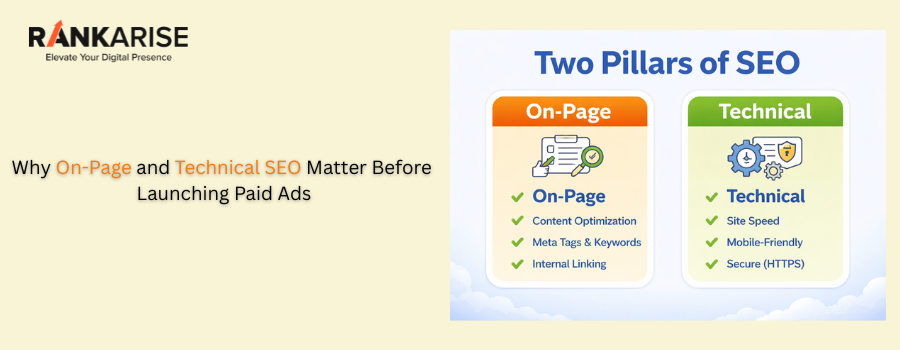
What is On-Page SEO?
On-page SEO refers to the optimization of elements within your website that affect search engine rankings and user experience.
Key Elements of On-Page SEO:
- Optimized title tags and meta descriptions
- Proper use of headings (H1, H2, H3)
- Keyword placement and content quality
- Internal linking structure
- Image optimization (alt text, size, format)
- URL structure
Many businesses choose professional SEO consulting to ensure their on-page elements are fully optimized before running campaigns.
Why It Matters Before Paid Ads
When users click on your ads, they land on your website. If your content is not relevant, engaging, or optimized, they will leave immediately—resulting in high bounce rates and wasted ad spend.
Benefits:
- Improves landing page relevance
- Increases conversion rates
- Enhances user experience
- Boosts Quality Score in Google Ads
What is Technical SEO?
Technical SEO focuses on the backend aspects of your website that help search engines crawl, index, and rank your pages effectively.
Key Elements of Technical SEO:
- Website speed and performance
- Mobile responsiveness
- Secure website (HTTPS)
- XML sitemap and robots.txt
- Fixing crawl errors and broken links
- Structured data (schema markup)
Using the right technical SEO tools can help identify issues like slow speed, crawl errors, and indexing problems.
Why It Matters Before Paid Ads
Even the best ad campaigns will fail if your website is slow, broken, or difficult to navigate.
Benefits:
- Faster loading pages reduce bounce rates
- Better crawlability ensures proper indexing
- Improves user trust and credibility
- Supports long-term organic growth
How SEO Impacts Paid Advertising Performance
1. Improves Quality Score
Google Ads evaluates your landing page experience. A well-optimized page leads to:
- Higher Quality Score
- Lower cost per click (CPC)
- Better ad placements
2. Increases Conversion Rates
SEO ensures your landing pages are:
- Relevant to user intent
- Easy to navigate
- Optimized for action (CTAs)
This directly improves conversions from paid traffic.
3. Reduces Wasted Ad Spend
Without SEO:
- Users leave quickly
- Pages load slowly
- Content doesn’t match intent
With SEO:
- Visitors stay longer
- Engage more
- Convert better
4. Builds Trust and Credibility
Users trust websites that:
- Load fast
- Look professional
- Provide valuable content
Technical SEO ensures your site meets these expectations.
5. Supports Retargeting and Funnel Strategy
A properly optimized website helps:
- Track user behavior
- Build remarketing audiences
- Improve funnel performance
Common Mistakes Businesses Make
Before running ads, many businesses overlook:
- Slow website speed
- Poor mobile experience
- Missing meta tags
- Broken links or 404 pages
- Thin or irrelevant content
- No clear call-to-action
These issues lead to low ROI from paid campaigns.
Pre-Ads SEO Checklist
Before launching any paid ads, ensure your website is ready:
On-Page SEO Checklist:
- Keyword-optimized landing pages
- Clear headings and structure
- High-quality, relevant content
- Strong CTAs
- Internal linking
Technical SEO Checklist:
- Page speed under 3 seconds
- Mobile-friendly design
- HTTPS enabled
- No broken links
- Proper indexing (Google Search Console)
- XML sitemap submitted
Real-World Example
Imagine running a Google Ads campaign for a service page:
- Without SEO:
- Page loads in 6 seconds
- Poor content
- No CTA
- Result: High bounce rate, low conversions
- With SEO:
- Page loads in 2 seconds
- Optimized content with keywords
- Clear CTA
- Result: Higher conversions, lower CPC
How SEO and Paid Ads Work Together
SEO and paid ads are not competitors—they complement each other.
| SEO | Paid Ads |
| Long-term results | Immediate traffic |
| Organic visibility | Paid visibility |
| Builds trust | Drives quick leads |
| Cost-effective over time | Requires ongoing budget |
Best Strategy:
Use SEO as the foundation and paid ads as the accelerator.
Conclusion
Launching paid ads without proper on-page and technical SEO is a costly mistake. A well-optimized website ensures that every click you pay for has the highest chance of converting into a customer.
Additionally, implementing strong local SEO strategies can help businesses gain better visibility before scaling paid ads.
By focusing on SEO first, you:
- Maximize ROI
- Improve user experience
- Reduce ad costs
- Increase conversions
In short: Fix your website before you fund your ads.
FAQs
1. Can I run ads without SEO?
Yes, but it’s not recommended. Without SEO, your ad performance and ROI will suffer.
2. How does SEO affect Google Ads Quality Score?
SEO improves landing page experience, which is a key factor in Quality Score.
3. What is more important: SEO or paid ads?
Both are important, but SEO should come first to build a strong foundation.
4. How long does SEO take before running ads?
Basic SEO improvements can be done within a few days to weeks before launching ads.